Writing Ruhls!
Official site of author R. Ruhl
ABOUT ME

R. Ruhl is a horror and mystery author and member of the Pittsburgh chapter of the Horror Writers Association. Ruhl lives with a genetic condition that affects the joints and nerves, and their work focuses on disability representation and advocacy. They enjoy explorations of diversity in which characters’ identity is never the source of conflict and they can fight monsters instead of the real world. Ruhl has an MFA in Writing Popular Fiction from Seton Hill University, a certificate in gender studies with a focus on queer theory, and also has a background in STEM. In their free time, they enjoy astronomy, visiting museums, dressing up for Renaissance fairs, and caring for a very stubborn old dachshund.
Fun Facts... Ruhl’s love of horror began as they grew up watching classic monster films and The Twilight Zone with their family. Disney’s The Great Mouse Detective is their favorite movie and was foundational in their interest in mystery and the long nineteenth century. Their other favorite adaptation of Sherlock Holmes is an old radio program they listened to on car rides. Ruhl loves historical fiction with the hope of encouraging people to make connections with the past and think about the present in new ways.
☀️ RECENT WORKS 🌙
The Life of a Math Tutor in the 24th Century
Flash fiction piece written for the 2026 In Your Write Mind Writers Conference.
Featured on S2 E5 of The Atomic Voodoo Lounge, a Speculative Noir Literary Podcast by Maxwell Vagus. These stories speak to themes of nostalgia and the environment.
I am a coeditor and submission reader for Common Folk Artist Collective's Literary Journal. Check it out. We'd love to see your short stories, flash fiction, and graphic novels. Submissions for Lore are currently open until June 30.
Three Generations of Halloween and Horror Love
An article for the HWA Halloween Haunts Blog, about how love for horror movies & Halloween have been a unifying factor through 3 generations of my family. Both personal essay & an analysis of changing societal fears in the US from the 1950s to today.


I AM QUERYING: HEARTFONT MANOR
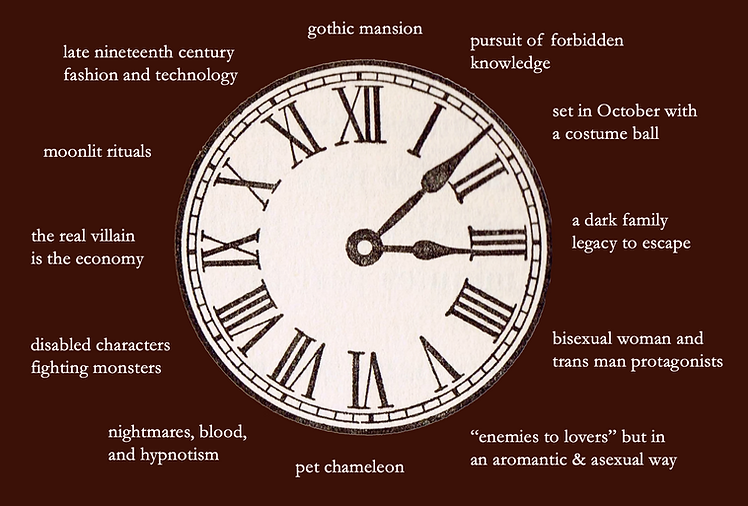
Heartfont Manor is an adult gothic horror novel that reimagines the vampire myth through a disability lens, in which the vampire is a symbol for misdiagnosis. This novel is inspired by Dracula with a Lovecraftian tone and would appeal to readers of Reluctant Immortals, Mexican Gothic, and anyone who has doomscrolled on a symptom-checker website.
In a setting inspired by the Gilded Age with a modern approach to diversity and queerness, historian Aidan and tailor Lucy accept jobs at a remote manor owned by an old money family rumored to know the secret to immortality. Aidan and Lucy don't believe these stories, but they're in no position to turn down any prospective employment. The reclusive siblings who live in the manor claim not to believe the stories either and yearn to escape the shadow of their family name, yet they remain obsessed with the past and soon become obsessed with their new employees, despite the taboo of the class divide. As the Autumn days grow shorter, the siblings' behavior grows more erratic, and as they engage in methodical seduction, Aidan's chronic illness inexplicably worsens, Lucy becomes paranoid the manor itself is alive, and their nightmares blur with reality. They must learn to prioritize health and community over work, trust their instincts, and unravel the Heartfont family's dark history to oppose literal bloodsucking capitalists and worse, doctors who insist problems are just anxiety.
In Heartfont Manor, traditional gothic gender roles are subverted, platonic love is centered, and dismissal from the medical field is more dangerous than the supernatural. The novel is inspired by my own experiences living with chronic illness that went undiagnosed for almost 10 years. In real life, diseases have scientific causes, but wouldn't it be more fun if sometimes it was an actual monster?
A fictional 19th century setting brings the historical literature theme of "progress vs tradition vs the environment" to a 21st century audience in which it remains more relevant than ever.